
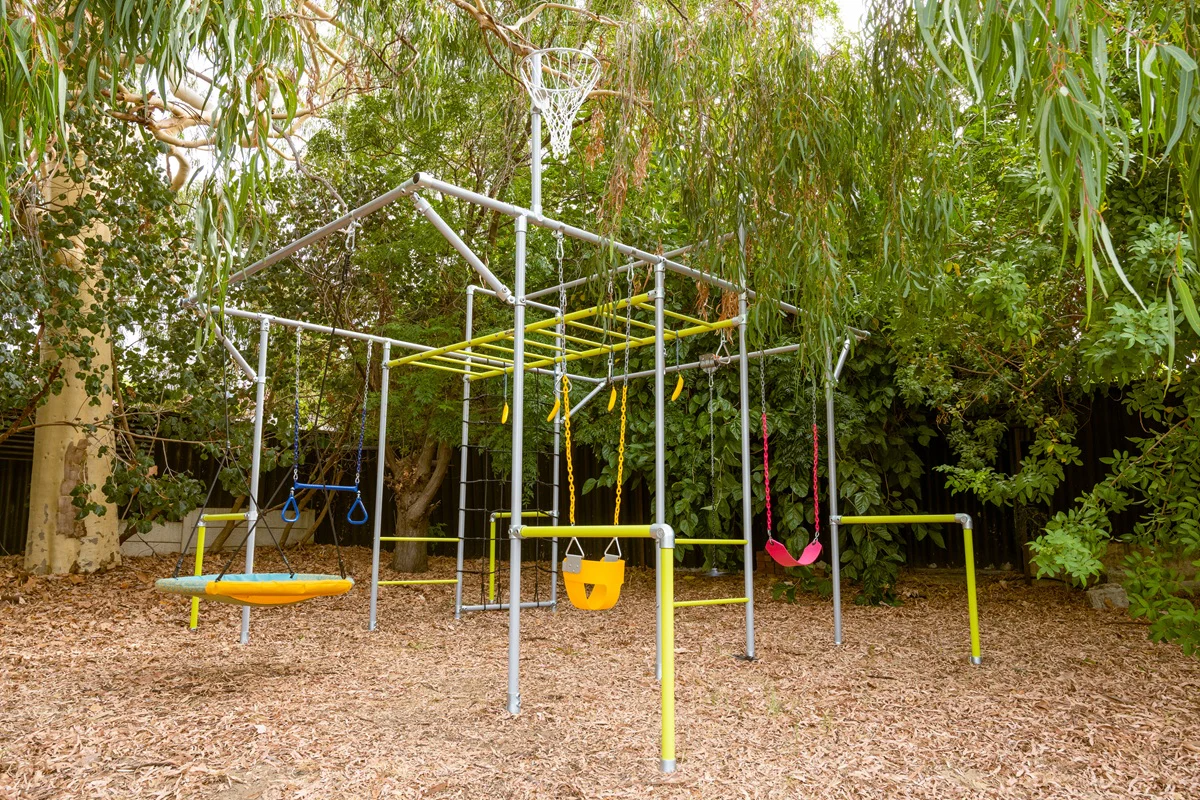
When setting up a backyard playground, most parents focus on the fun stuff—swings, climbing frames, and monkey bars. But one of the most important decisions often gets overlooked: what goes underneath it all.
The right surface doesn’t just complete the look of your play area—it plays a critical role in safety, durability, and long-term usability. Whether you’re installing a full play system or a few key features, choosing the right ground cover is essential for creating a safe and enjoyable environment for your kids.
So, what surface is best under playground equipment? Let’s break down the most practical options for Australian backyards.
Why Playground Surfacing Matters
Kids will fall—it’s part of play. The goal isn’t to prevent every tumble but to reduce the risk of serious injury.
A proper surface helps to:
- Absorb impact from falls
- Prevent slips and trips
- Improve drainage
- Reduce wear and tear around equipment
If you’re installing backyard playground equipment, the surface you choose should always match the type and height of the equipment. For a deeper dive into surface safety and options, this guide on best backyard playground surfaces is a helpful starting point.
1. Rubber Mulch: A Popular All-Rounder
Rubber mulch is one of the most commonly used playground surfaces, and for good reason.
Pros:
- Excellent shock absorption
- Long-lasting and low maintenance
- Doesn’t compact like natural mulch
- Drains well in wet conditions
Cons:
- Higher upfront cost
- Can retain heat in direct sun
For active setups like climbing frames or monkey bars, rubber mulch provides reliable cushioning and durability.
2. Natural Grass: Budget-Friendly but Limited
Grass is often the default option in Aussie backyards. While it’s soft and natural, it’s not always the safest choice for playground areas.
Pros:
- Affordable and easy to install
- Visually appealing
- Soft underfoot (initially)
Cons:
- Wears out quickly in high-traffic areas
- Becomes slippery when wet
- Limited impact absorption over time
Grass can work for low-impact play but may not be ideal under heavier or more active setups like custom backyard swing sets.
3. Sand: Classic and Kid-Friendly
Sand has been used in playgrounds for generations. It’s soft, natural, and encourages creative play.
Pros:
- Good impact absorption
- Affordable
- Great for sensory play
Cons:
- Requires regular raking and topping up
- Can attract pests or debris
- Gets messy (especially indoors)
Sand works well under swings and lower equipment but may need edging to keep it contained.
4. Engineered Wood Fibre (Softfall Mulch)
This is a step up from standard bark mulch and is commonly used in public playgrounds.
Pros:
- Good cushioning
- More stable than loose bark
- Natural appearance
Cons:
- Needs replenishing over time
- Can shift with heavy use
- Requires proper installation depth
It’s a solid option for families wanting a natural look with improved safety.
5. Rubber Tiles or Mats: Premium Safety Option
Rubber tiles or poured rubber surfaces are among the safest options available.
Pros:
- Excellent impact absorption
- Clean and low maintenance
- Slip-resistant
Cons:
- Higher cost
- Requires professional installation (in some cases)
These surfaces are ideal for high-use areas or where safety is the top priority, especially under climbing structures and swings.
6. Artificial Turf with Underlay
Artificial grass has become increasingly popular in Australian homes, especially when paired with a shock-absorbing underlay.
Pros:
- Low maintenance
- Clean and visually appealing
- Better durability than natural grass
Cons:
- Needs proper installation
- Can get warm in direct sun
- Less cushioning without underlay
This option works well if you want a neat, modern look while still maintaining some level of safety.
Choosing the Right Surface for Your Setup
There’s no one-size-fits-all answer—the best surface depends on your space, budget, and the type of equipment you’re installing.
Here are a few key factors to consider:
1. Fall Height
The higher the equipment, the more impact absorption you’ll need. Climbing frames and monkey bars require softer surfaces than ground-level play.
2. Maintenance
Some surfaces (like sand or mulch) need regular upkeep, while others (like rubber or turf) are more hands-off.
3. Climate
In Australia, heat and UV exposure are major considerations. Choose materials that can handle harsh sun without degrading quickly.
4. Drainage
Good drainage is essential to prevent water pooling and surface damage, especially during heavy rain.
Practical Setup Tips
To get the most out of your playground surface:
- Ensure adequate depth for loose materials (like mulch or sand)
- Extend the surface beyond the equipment footprint
- Regularly check for wear and uneven areas
- Keep the area clear of debris
A well-prepared surface not only improves safety but also extends the life of your playground setup.
Final Thoughts
Choosing the right surface under your playground equipment is just as important as selecting the equipment itself. It’s what keeps your kids safe, supports active play, and ensures your backyard remains functional over time.
Whether you opt for rubber mulch, sand, artificial turf, or a premium rubber surface, the goal is the same: create a space where kids can play freely and safely.
By pairing the right surface with quality backyard playground equipment, you’ll have a backyard that’s not only fun—but built to last.
If you want next, I can:
- Turn this into a pillar + cluster SEO structure
- Or add FAQ schema-style questions for featured snippets