
The kitchen is the undisputed heart of the home. It is where meals are prepared, homework is tackled, and families gather at the beginning and end of each day. However, designing a kitchen that accommodates the high-energy, mess-prone reality of young children while maintaining a sophisticated, high-end aesthetic is a common challenge for homeowners.
Many believe that making a space family-friendly requires compromising on luxury, resulting in bright primary colors, plastic guards, and institutional finishes. In reality, modern interior design provides numerous strategies to seamlessly blend durability with refinement. By selecting high-performance materials, optimizing the spatial layout, and integrating smart storage solutions, you can create a hardworking culinary workspace that welcomes children without sacrificing a mature, upscale design aesthetic.
1. Prioritize High-Performance Countertops
Countertops bear the brunt of everyday kitchen activity, from spilled juice boxes and hot pans to stray crayon marks and impact from dropped toys. Choosing the right surface material is the single most critical decision in balancing durability with elegance.
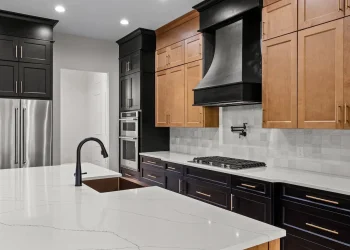
While natural marble is highly coveted for luxury kitchens, its high porosity makes it incredibly vulnerable to etching from acidic liquids like orange juice, tomatoes, and lemons. A sophisticated alternative is engineered quartz. Composed of roughly ninety percent crushed natural quartz bound with polymer resins, engineered quartz is completely non-porous, highly resistant to staining, scratching, and chipping, and requires absolutely no periodic sealing. Modern manufacturing techniques allow quartz to mimic the delicate veining of Calacatta marble with striking accuracy.
Another excellent premium option is porcelain slab countertops. Porcelain is incredibly dense, heat-proof, and virtually impervious to scratches, allowing you to maintain an ultra-sleek, thin-profile countertop aesthetic that can handle the toughest family environments.
2. Opt for Wipeable, High-End Cabinetry Finishes
Cabinet surfaces are constantly exposed to sticky fingers, flying food, and impact from toy carts or stools. Traditional high-gloss lacquer finishes look incredibly modern but act as magnets for fingerprints, smudges, and micro-scratches.
To maintain an elegant look that requires minimal maintenance, consider ultra-matte, anti-fingerprint laminates or acrylics. These advanced surfaces utilize nanotechnology to reject oils and light reflections, keeping the cabinets looking flawlessly clean even after a busy afternoon of baking with toddlers.
If you prefer the warmth of natural wood, choose species with pronounced grain patterns, such as white oak or walnut, finished with a high-quality matte clear coat. The natural variation in wood grain is exceptionally forgiving, easily concealing minor dents, scuffs, and dust that inevitably accumulate over time. When selecting door styles, a transitional modified shaker or a seamless flat-panel slab profile eliminates deep dust-catching grooves, making wipe-downs effortless.
3. Strategize Appliance Selection and Placement
Appliances can either be seamless design elements or major safety hazards depending on how they are integrated into the kitchen layout.
Integrated Panels
Stainless steel appliances are a classic luxury standard, but standard finishes show every drop of water, smudge, and grease mark. Panel-ready appliances allow you to mount custom cabinet doors directly onto the faces of your refrigerator, freezer, and dishwasher. This completely eliminates large expanses of smudged metal, creating a clean, cohesive, and upscale furniture-like appearance throughout the space.
Safety-Conscious Cooking Surfaces
When it comes to the cooktop, induction technology is the gold standard for both safety and high-end design. Unlike traditional gas burners that utilize open flames and leave heavy cast-iron grates hot for hours, induction cooktops use electromagnetic energy to heat the cookware directly. The smooth ceramic glass surface remains relatively cool to the touch, drastically reducing the risk of accidental burns from curious hands reaching up to the counter level. Furthermore, the completely flat surface is incredibly easy to clean with a single swipe of a microfiber cloth.
4. Design an Inclusive, Multi-Level Island
The kitchen island is the focal point of a luxury layout, and it can easily be configured to accommodate children safely without looking like a dedicated playroom element.
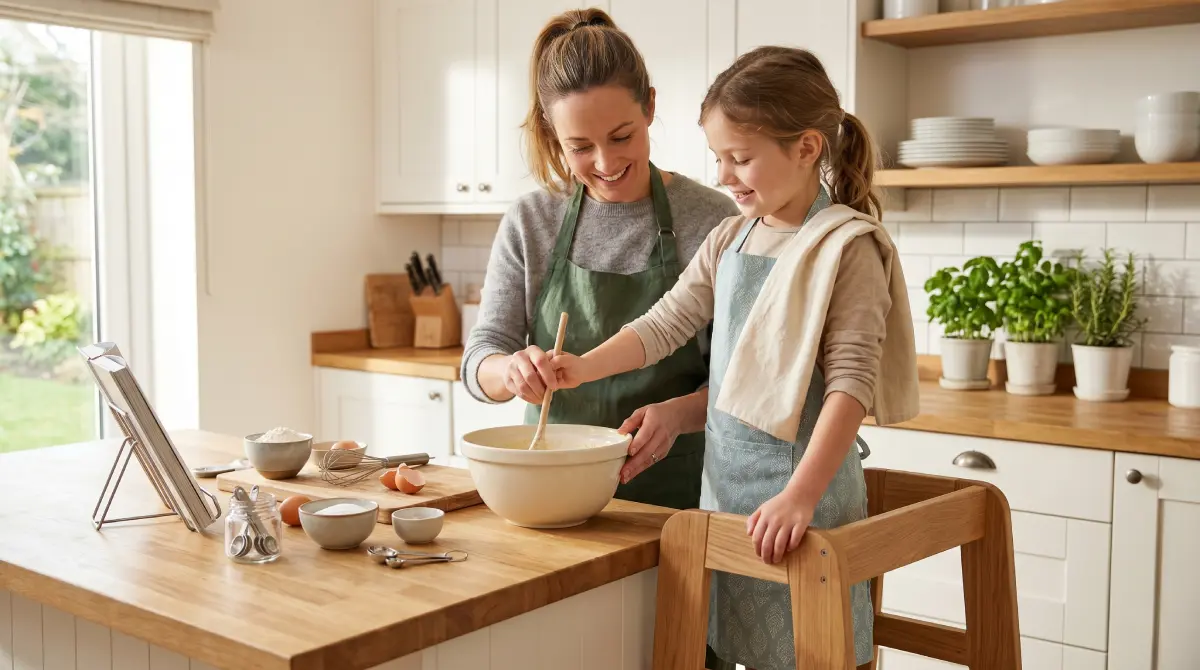
Instead of a traditional single-level island where bar stools place children dangerously close to hot cooktops or prep sinks, consider an asymmetrical or multi-level design. Extending the countertop outward to create a dedicated lower table-height dining section attached to the main island allows younger children to sit safely in standard chairs rather than high bar stools.
This design keeps them close to the action for snacks or homework while ensuring they are physically separated from active cooking zones. Underneath the island overhang, wrap the base structure in durable wood paneling or matching countertop material rather than standard painted drywall, which will quickly become scuffed and dented by swinging feet.
5. Implement Accessible Low-Level Storage Zones
Encouraging independence in children keeps them engaged and prevents them from constantly climbing on counters to reach items in upper cabinets. However, this independence must be managed so that the kitchen layout remains uncluttered.
Dedicate a few deep base cabinet drawers specifically for child-friendly items. Store their bowls, plates, water bottles, and healthy snacks in these lower zones, using heavy-duty, soft-close drawer glides that prevent little fingers from getting pinched.
To maintain a sophisticated exterior, these drawers should look identical to the rest of your premium cabinetry from the outside. Inside, utilize custom wooden pegs or acrylic dividers to keep everything organized. Concurrently, ensure that heavy cookware, sharp knives, glassware, and cleaning chemicals are secured in upper cabinets or behind integrated magnetic safety locks hidden entirely inside the frame.
6. Select Forgiving, High-Traffic Flooring
Kitchen floors must withstand dropped glasses, spilled liquids, and toy cars dragged across the surface. While natural hardwood is popular for open-concept homes, it can warp from standing water and scratch easily under heavy duress.
For an elegant aesthetic that offers absolute peace of mind, large-format porcelain floor tiles are an unmatched solution. Porcelain can be manufactured to perfectly replicate natural limestone, slate, or even hardwood planks. It is incredibly hard, stain-proof, and will not absorb moisture. Opt for a matte or textured finish to provide slip resistance for running feet, and ensure the installer uses a high-performance, stain-resistant grout color that matches the tile to minimize the appearance of dirt.
Another excellent luxury choice is high-quality engineered hardwood featuring a wire-brushed texture and a durable urethane finish, which masks daily wear far better than smooth, high-gloss solid wood floors.
7. Curate Performance Textiles for Seating
If your kitchen includes a breakfast nook, banquette, or island seating, the upholstery fabrics must be carefully vetted. Delicate silks, standard cottons, or porous leathers will quickly fall victim to spills.
Luxury family design relies heavily on modern performance textiles. Fabrics treated with advanced barrier technologies allow liquids to bead up on the surface rather than soaking into the core fibers, making it simple to blot away stains with a damp cloth. High-end synthetic leathers and commercial-grade vinyls offer a sophisticated, sleek look that can be wiped down completely with soap and water. These materials are available in deep textures and refined color palettes, ensuring your seating looks tailored and upscale while remaining fully practical for messy meals.
Frequently Asked Questions
How can I incorporate a chalkboard or display area for kids without it looking messy?
Instead of painting a massive, chaotic chalkboard wall directly in the center of the kitchen, contain children’s creativity within architectural boundaries. You can install a custom-framed chalkboard or magnetic message board that matches the exact wood finish of your cabinetry inside a pantry door or on the side of a refrigerator enclosure. Another elegant approach is to use a sleek glass marker board in a neutral tone, which provides a functional drawing surface for kids but cleans up completely, maintaining a minimalist design when not in use.
What type of cabinet hardware is safest for kids but still looks high-end?
Steer clear of hardware with sharp, squared-off edges or long, protruding ends that can catch on children’s clothing or cause painful bumps if hit at eye level. Instead, opt for cabinet pulls with rounded, organic profiles, such as bow pulls, recessed cup pulls, or integrated finger channels cut directly into the cabinet doors. Finishes like brushed brass, oil-rubbed bronze, or matte black add an immediate sense of luxury while masking fingerprints far better than polished chrome or polished nickel.
Where should I position the microwave so that it is safe for family use?
Avoid placing the microwave over the range, as this requires children to reach over hot burners to access food. Placing it directly on the countertop wastes valuable workspace and looks cluttered. The most elegant and family-friendly solution is an under-counter microwave drawer installed in the kitchen island or lower base cabinets. These units slide open horizontally at the press of a button, allowing older children to safely lift bowls straight down onto a stable surface rather than balancing hot dishes at eye level.
How do I handle the trash and recycling setup in a family kitchen to keep it hidden yet functional?
Incorporate a dual-bin pull-out trash and recycling center directly integrated behind a matching cabinet face next to the sink or food preparation zone. To elevate convenience and sanitation for kids who always have full hands, install a hands-free electronic touchless system or a foot-pedal activator at the base of the cabinet toe kick. A gentle tap with a foot or knee automatically slides the drawer open, keeping sticky hands off the premium cabinetry exterior.
Are open shelves a good idea in a kid-friendly kitchen?
Open shelving can look exceptionally beautiful, but it requires discipline to maintain. If you use lower open shelves, they will inevitably become targets for kids to pull items down or store mismatched toys. If you want the airy, sophisticated look of open shelving, place them higher up the wall and populate them strictly with decorative items, fine cookbooks, or matching glassware that is safely out of reach. Keep your daily family dinnerware hidden behind closed cabinet doors to maintain a clean appearance.
How can I effectively conceal small appliances like blenders and air fryers?
Invest in a dedicated counter-level appliance garage equipped with pocket doors that slide back smoothly into the cabinet frame when opened. This allows you to keep small appliances plugged in and ready for quick family meals or smoothies, but completely hides them out of sight behind beautiful cabinetry woodwork when guests arrive.
What lighting design works best for a multi-functional family kitchen?
Layered lighting is essential for setting the right mood. Install bright, focused LED under-cabinet task lighting to safely illuminate cutting and prep surfaces. Over the kitchen island, select statement pendant fixtures that provide warm, ambient light and serve as structural art pieces. Make sure all light fixtures are connected to dimmer switches so you can easily shift from bright, safe illumination during daytime family baking to a soft, intimate glow for adult entertaining in the evening.