
A backyard improvement can look simple on paper. A homeowner may be planning a new fence, garden bed, deck, shed, or drainage feature, with excavation representing only one small part of the job.
The challenge is that the ground may contain infrastructure that cannot be seen from the surface. Buried utility lines and other underground services can cross lawns, driveways, side yards, and landscaped areas, sometimes in places a homeowner would not expect.
Before residential excavation begins, it is important to understand what may be below the planned work area. Proper landscaping preparation is not only about measuring distances and ordering materials. It also involves checking whether digging could interfere with existing underground infrastructure.
Everyday Projects Can Involve Significant Digging
Many common home and garden projects require soil to be disturbed more deeply than homeowners first realize.
Fence installation is a good example. Each post may require a substantial hole, and a long fence line can create multiple excavation points across a property. A buried service crossing that route may not be obvious until digging has already started.
Decks and sheds can also require excavation for footings or supports. Depending on the design, contractors may need to dig at several fixed locations that cannot easily be moved without changing the project layout.
Other projects can involve even more ground disturbance. Pool installation, drainage improvements, grading work, retaining walls, tree planting, and major landscaping projects may all require trenches, deep holes, or broad areas of backyard excavation.
Even planting a mature tree can involve digging far below the surface. The issue is not whether the project feels like construction. What matters is the depth and location of the digging.
Underground Utilities Are Not Always Obvious
Homeowners generally know that important services may run underground, but the actual routes can be difficult to predict.
Gas, electricity, telecommunications, water, drainage, and other services may be buried around residential properties. In some cases, additional privately owned lines may connect detached structures, outdoor lighting, pools, irrigation systems, or other features.
A homeowner may also inherit infrastructure installed by a previous owner. An old electrical feed to a shed, a private drainage connection, or a line serving an outdoor feature may not appear on current renovation plans.
Visual inspection provides limited information. Utility routes do not always follow fences, property lines, or other visible features. Landscaping changes over time can also hide evidence of where older installations were placed.
This is why assumptions can create problems during backyard digging. A clear patch of lawn does not necessarily mean the ground below it is clear.
Safe Digging Starts With Knowing the Work Area
Good planning begins by defining exactly where excavation will occur.
For a fence, that means identifying the proposed fence line and every post location. For a shed or deck, it means marking footing areas. For drainage work, it may involve mapping an entire trench from one part of the property to another.
Once the work area is known, homeowners and contractors can determine what locating steps are appropriate before excavation starts.
This process is particularly important when mechanical excavation equipment will be used. Augers, mini excavators, trenchers, and similar equipment can disturb soil quickly, leaving little opportunity to react if an unexpected underground service is encountered.
Hand digging still requires care. The fact that a project uses a shovel rather than machinery does not eliminate the need to understand what is below the surface.
Treating utility identification as part of early property improvement planning can help prevent last-minute changes after materials, labour, or equipment have already been scheduled.
Some Services May Require Private Utility Locating
One important distinction for homeowners is that not every underground feature on private property is necessarily covered by the same locating process.
Privately owned infrastructure can exist beyond the portion of a service maintained or identified by a public utility. Examples may include lines installed to serve detached garages, sheds, outdoor lighting, private electrical equipment, irrigation systems, or other improvements on the property.
This means a homeowner should not assume that every buried feature has been identified simply because one locating step has been completed.
When privately owned infrastructure may cross an excavation area, additional private utility locating can provide more information before digging begins.
Hamilton property owners who need help identifying privately owned underground infrastructure can use Complete Locating Services as a local resource for private utility locates Hamilton before residential excavation or landscaping work proceeds.
The goal is to understand the site conditions early enough for the project plan to be adjusted if necessary.
Make Utility Checks Part of Landscaping Preparation
Locating underground services should fit into the same planning stage as measuring the property, confirming project dimensions, and deciding where structures or landscaping features will go.
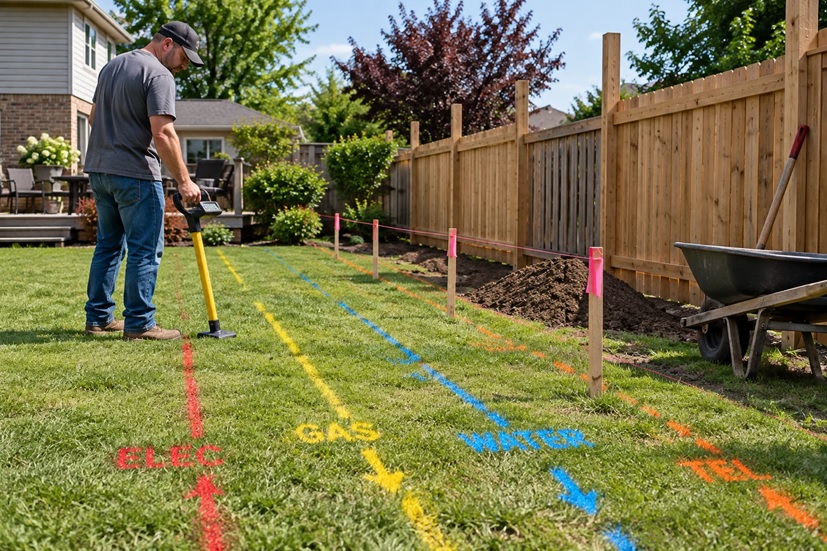
If markings show that an underground service conflicts with a proposed fence post, footing, trench, or planting area, the design may be adjusted before excavation begins. Moving a post or changing a trench route during planning is usually easier than discovering a conflict after digging has started.
Homeowners should also make sure contractors understand the locations that have been identified and any restrictions affecting the work area. Markings should remain visible for the people doing the excavation rather than being treated as a formality completed earlier in the project.
For Hamilton homeowners, the main lesson is straightforward. Any project that involves substantial digging deserves more than a surface-level assessment of the yard.
Fences, decks, sheds, pools, trees, drainage systems, and other improvements can all intersect with buried infrastructure. Making underground utility checks part of the planning process gives homeowners and contractors a clearer picture of the property before the first hole or trench is opened.